
PRODUCT OVERVIEW
Ansys Lumerical FDTD is the gold-standard for modeling photonic components, processes, and materials. The integrated design environment provides scripting capability, advanced post-processing, and optimization methods.
Product Features
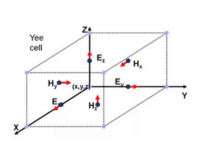
FDTD 3D Electromagnetic Solver
It has high accuracy with options for auto non-uniform meshes. Lumerical FDTD is also foundry compatible and supports automated design processes with its scripting capabilities, advanced post-processing, and optimization routines.
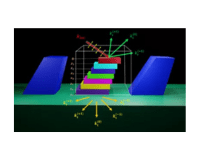
RCWA Solver
RCWA provides fast simulations of complex multilayer stacks with surface patterning, from capturing the electric and magnetic field distributions to transmitting, reflecting, and evaluating power in each grating order.
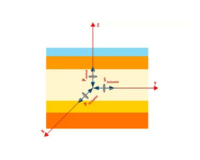
STACK Solver
It is ideal for rapid prototyping for thin film applications. From capturing microcavity effects and interference to handling dipole illumination and plane wave functions, STACK provides quick simulations of complex thin film multilayer stacks.
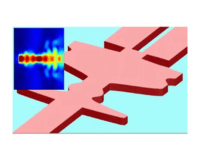
Photonic Inverse Design
Automatically discover optimal designs and geometries for a targeted figure of merit. Discover non-intuitive geometries that optimize performance, minimize area, and improve manufacturability.
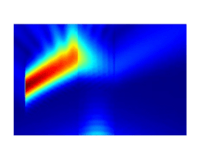
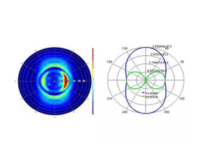
Post-processing Analysis
Powerful post-processing capability, including far-field projection, band structure analysis, bidirectional scattering distribution function (BSDF) generation, Q-factor analysis, and charge generation rate.
Nonlinearity and Anisotropy
Choose from various nonlinear, negative index, and gain models. Define new material models with flexible material plug-ins.
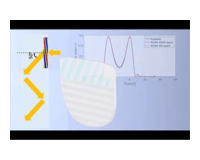
Material Multi-coefficient Models
Use multi-coefficient models for accurate material modeling over large wavelength ranges. Automatically generate models from sample data or define the functions yourself.
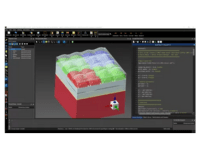
3D CAD Environment
FDTD’s CAD environment and parameterizable simulation objects allow rapid model iterations for 2D and 3D models. It provides eye comfort with Dark Mode and is fully compatible with 4k high DPI screens and modern 3D views.
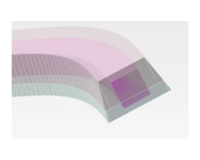
Layer Builder
Change the position, ordering, and thickness of each layer. Simulate curved side-angled waveguides, then export the layer configuration, including material data, as a process file (.lbr) that foundries can fabricate.
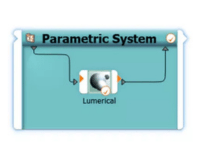
Lumerical Connectors in Ansys optiSLang
Automate multiphysics simulation workflows and benefit from the state-of-the-art sensitivity analysis and optimization algorithms available in optiSLang.
MODULES
Versatile and Scalable Photonic Design Powered by Lumerical FDTD
Lumerical FDTD is industry’s leading simulation software for design and optimization of a wide range of photonic components. Lumerical FDTD is remarkably versatile and scalable, offering unmatched speed and the ability to harness HPC (CPU and multi-GPU) and cloud resources.
Key Features
FDTD – 3D Electromagnetic Solver
RCWA – Rigorous Coupled Wave Analysis
STACK – Optical Multilayer Solver
Photonic Inverse Design Optimization
Scale and Accelerate with HPC and Cloud
3D CAD Environment
Layer Builder
Lumerical connectors in Ansys OptiSLang
Ansys Optics Solution Interoperability
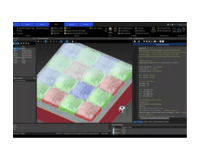
Industry’s Leading Choice for Versatile and Scalable Photonic Design
Ansys Lumerical FDTD is photonic simulation software that integrates FDTD, RCWA, and STACK solvers in a single design environment. This empowers precise analysis and optimization for various devices, including diffraction gratings, multilayered coatings, uLEDs, CMOS image sensors, metalenses, and metasurfaces, delivering best-in-class performance across diverse applications.
Quick Specs
Performance and accuracy with FDTD
Periodic structures analysis
Multilayer thin films analysis
Scale with HPC, GPU, and cloud
Connects with multiscale and multiphysics
Simulate gratings, polarizers, and coatings
Connect with optiSLang for optimization
Automation API
Particle swarm
What’s New

GPU-Accelerated Simulations in Lumerical FDTD
The latest enhancement in Ansys Lumerical FDTD introduces GPU-accelerated simulations, enabling significant memory savings and faster meshing times.
Volume Holographic Gratings Simulations
New layer repetition feature for simulating volume holographic gratings in RCWA provides users with fast multi-layer simulations of holographic gratings for AR/VR and head-up display applications.
Modern UI for Ansys Lumerical FDTD
The Ansys Lumerical FDTD user interface features a contemporary, streamlined design with a new tabbed tool strip for efficient job launching and enhanced usability.